

Rats and mice chew wiring, spread disease and hide in roofs, walls and subfloors. Learn the signs to look for and how to clean droppings safely. Then see what a technician checks at an inspection, so you know when to call for rodent control in Bendigo.
Professional rodent control combines:
- Inspection
- Targeted treatment
- Safe removal
- Prevention
VIP Pest Control provides practical Rochester rodent-control solutions for homes and businesses.
Rodent control in Rochester may include:
- Scheduled inspections
- Monitoring stations
- Entry-point checks
- Hygiene advice
- Waste-storage changes
- Follow-up visits
What Types of Rodents Are Common in Australian Homes?
Victoria’s main pest rodents are the Norway rat, roof rat and house mouse.
They differ in:
- Size
- Climbing ability
- Nesting habits
- Behaviour
So, identifying the likely species helps guide inspection and treatment.
How Can You Identify Rats vs. Mice, And What Are Their Behaviours?
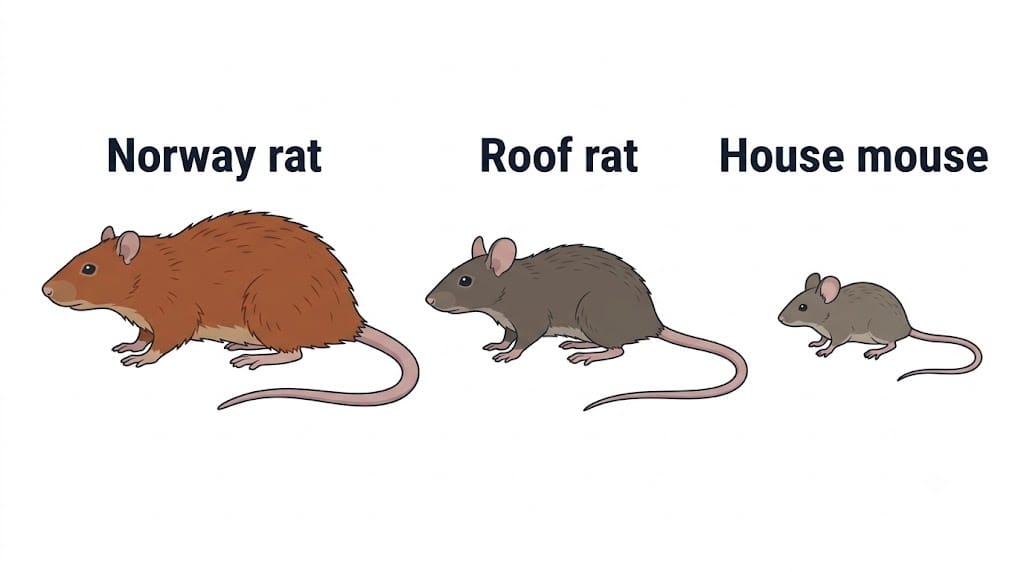
| Features | Norway rat | Roof rat | House mouse |
|---|---|---|---|
| Weight | 450 gm | 260 gm | 15 gm |
| Colour | Coarse red/brown | Fine grey, black, brown hairs | Grey brown |
| Typical behaviour | Digs, swims and moves through drains, gardens and subfloors | Climbs well and nests in roofs, walls, trees and buildings | Nests indoors near food, warmth and stored materials |
How Does Rodent Activity Change With the Seasons?
Rodents remain active throughout the year. Their movement changes with:
- Weather
- Moisture
- Food availability
- Building conditions
Tip: Before winter, check roof gaps, door seals, sheds, storage areas and wall cavities.
Different rodents can enter through small gaps:
| Rodents | Gaps in mm |
|---|---|
| Mice | 8 |
| House mouse | Up to approximately 20 |
| Rat hole | Approx 80 |
An inspection remains the best way to confirm pest activity on your property.
What Are the Signs of a Rodent Infestation?
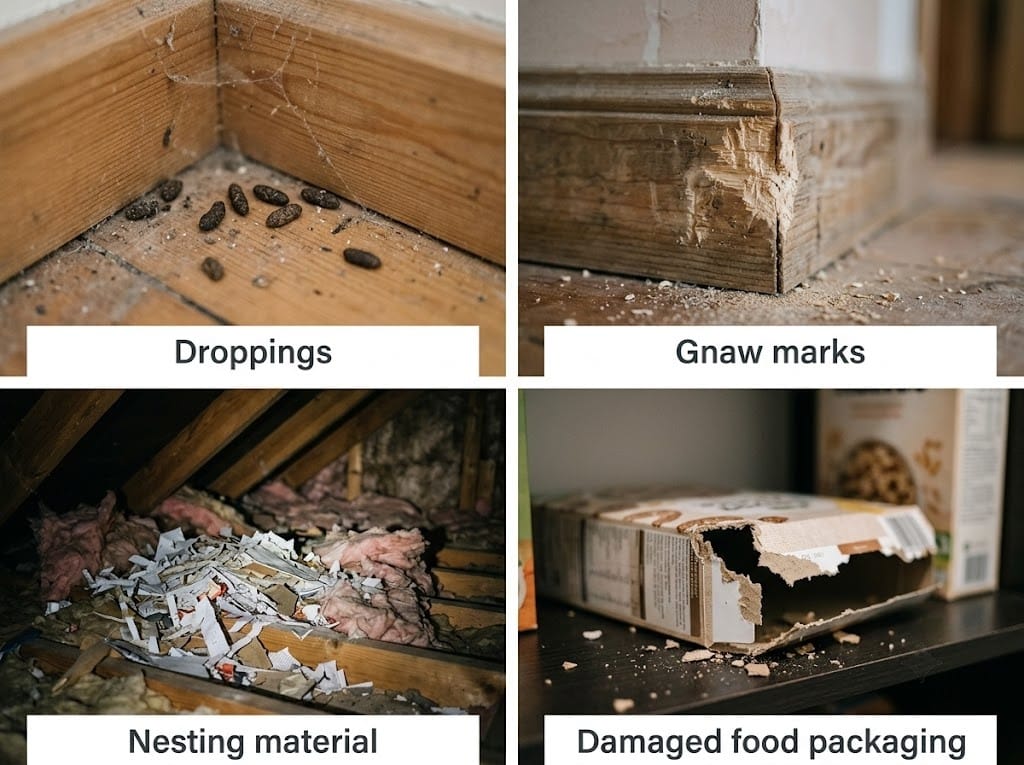
If you are feeling the presence of a large, unwanted number of mice or other rodents around the building, look for signs like:
- Droppings
- Gnaw marks
- Nesting material
- Scratching
- Strong odours
- Damaged food packaging
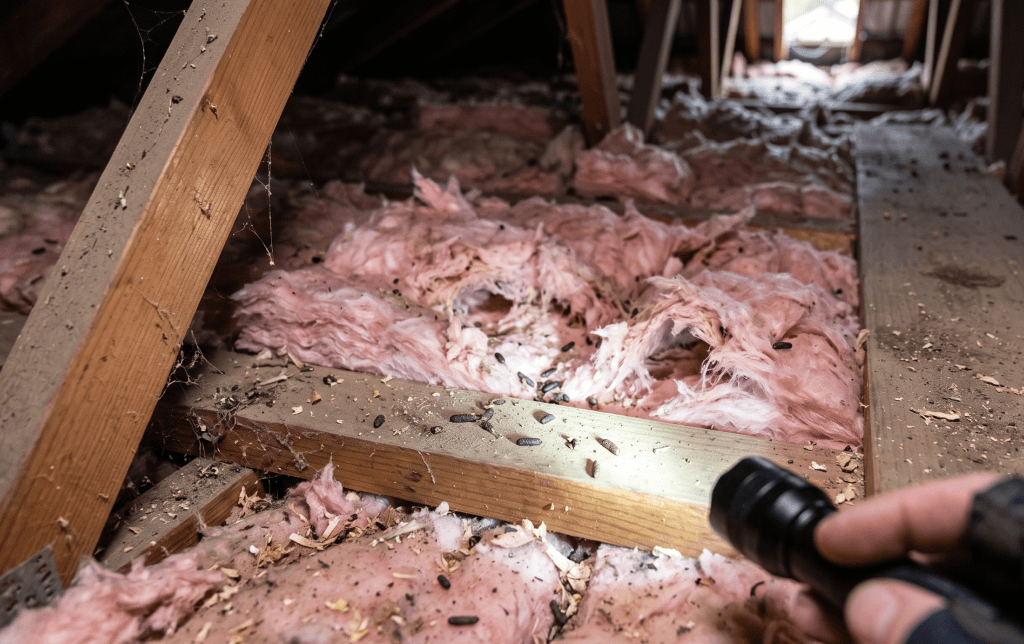
How Can You Detect Rodents in Roof Cavities, and Why Are They Dangerous?
Rodents can be in small spaces like roof cavities in your home. The signs may include:
- Damaged skirting boards or flooring
- Shredded paper, insulation or fabric
- Holes around pipes, vents and doors
- Gnaw marks on wiring, timber and packaging.
What Odours and Sounds Can Indicate a Rodent Infestation?
Ammonia, a musky smell, a rotten odour and sounds like squeaking, scratching, and running above ceilings.
Along with visible damage, these are stronger warning signs.
What Does Rodent Treatment Include?
A rodent treatment may include:
- Inspection of internal and external areas.
- Secured bait stations.
- Mechanical traps.
- Monitoring points.
- Entry-point recommendations.
- Food and rubbish storage advice.
- Follow-up checks.
Why Are Rodents Dangerous to Your Property and Health?
Rodents cause a health hazard as their urine, droppings and saliva can infect food and surfaces. They can even damage your property by chewing up:
- Wiring
- Insulation
- Timber
- Stored goods
- Food packaging.
How Can Rodents Cause Structural Damage and Electrical Hazards?
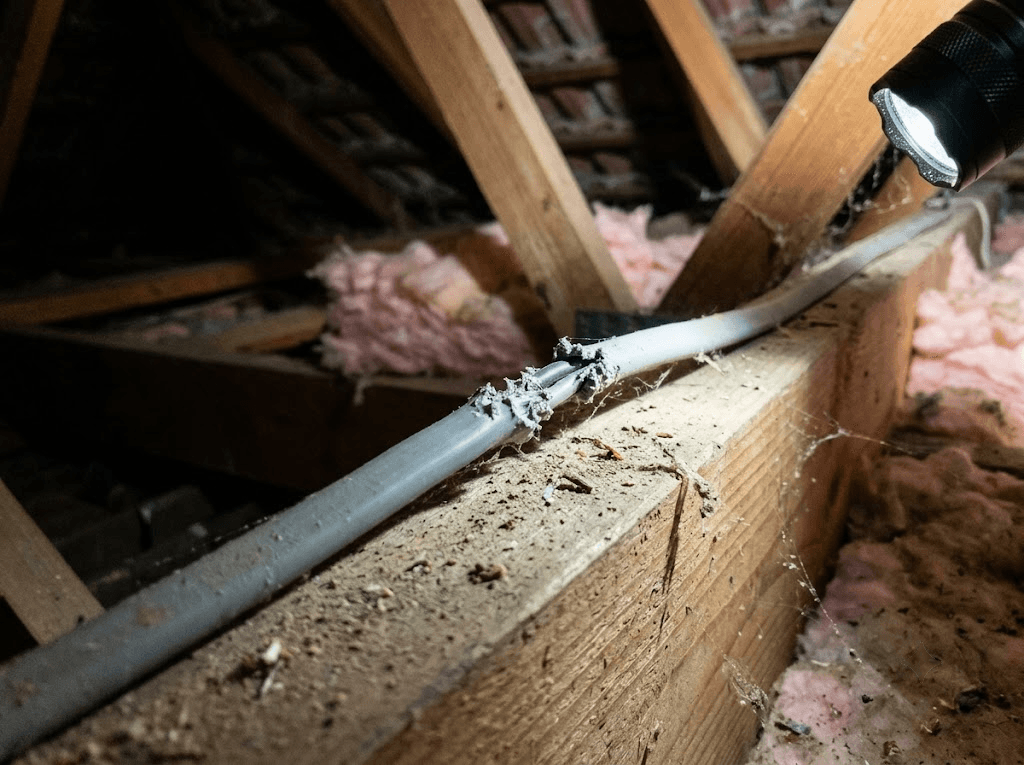
Rats and mice constantly gnaw to keep their front teeth filed down. They may damage:
- Roof materials and plasterboard.
- Stored food, cardboard and furniture.
- Vehicle components and garden equipment.
- Wall and ceiling insulation.
- Electrical wiring and insulation.
Damaged wires may lead to electrical faults and fire risks.
What Diseases and Health Risks Can Rodents Transmit?
Rats and mice can transmit many diseases with their urine, faeces, or bites.
Commonly transmitted diseases are:
- Hantavirus
- Leptospirosis
- Salmonellosis
- Rat-Bite Fever (RBF)
- Lymphocytic Choriomeningitis (LCMV)
- The Plague
How Should You Clean Rodent Droppings?
Never sweep or vacuum dry droppings, urine or nests. It puts tiny droplets that can carry viruses into the air, and you can breathe them in. Do this instead:
- Open all doors and windows, then leave the area for 30 minutes
- Put on rubber or plastic gloves
- Spray the area with disinfectant
- Leave it for 5 minutes, or as long as the label says.
- Wipe it up with paper towels.
- Put the towels in a covered bin, then wash your hands
How Is General Pest Treatment Different From Rodent-Specific Control?
General pest treatment targets insects like:
- Ants
- Cockroaches
- Fleas and spiders.
Rodents like rats and mice can move through roofs, walls, subfloors, and concealed storage areas.
Hence, they need a wider inspection of:
- Active travel routes
- Nesting and shelter areas
- Food and water sources
- Entry points and building gaps
What Targeted Treatment Methods Are Used For Rodent Control?
| Treatment method | What it does |
|---|---|
| Traps | Catch rodents along walls and other places |
| Bait stations | Sealed boxes that hold bait. Keep them out of reach of pets and children. |
| Monitoring stations | Track rodent activity and treatment progress |
| Sealing gaps | Seal pipe holes, vents, and doors |
Is DIY Rodent Control Better Than Professional Rodent Control?
DIY traps may help with small rodent problems, but they rarely reach the cause:
- Hidden nests in wall or roof cavity
- Roof movement and noises that you can’t trace
- Entry points or hidden gaps they use to get in.
Why Is Professional Rodent Treatment More Effective?
Our rodent control Bendigo team can identify :
- Rodent species
- Locate hidden activity
- Select suitable treatment points
- Recognise risks around children and pets
- Identify damaged wiring, contaminated materials and building gaps.
How Can Long-Term Prevention Plans Protect Your Property?
Long-term prevention plans help keep rodents out of your property by regular inspections, monitoring and practical maintenance. Technicians seal entry gaps and cut off food and water mice rely on.
The service may include:
- Rat and mouse inspections.
- Roof, shed, garage and subfloor assessments.
- Targeted traps or secured bait stations.
- Advice on food, rubbish, water and shelter sources.
- Entry-point and exclusion recommendations.
- Follow-up monitoring.
How Can You Schedule a Rodent Inspection?
Contact us for rodent control in Bendigo & Rochester,tell us the signs you have noticed and arrange an inspection. Provide the suburb, property type, affected areas and length of the problem.
What Should You Expect During an Inspection?
The technician will assess:
- Droppings, gnaw marks and nesting material
- Roof, wall and subfloor access
- Storage, food and rubbish areas
- Water leaks and moisture sources
- Possible gaps around doors, pipes and vents
After the inspection, you will receive practical safety instructions and recommendations suited to your property.
FAQs
How Much Does Rodent Treatment Cost?
Rodent treatment can cost $200 to $500. This depends on the property’s size and age and the size of the rodent infestation. If the burrows are outside the property, you may need to ask your neighbour or the concerned authority.
How Long Does It Take to Eliminate Rodents?
We can visit the same day, inspect and treat the nesting areas and entry points. We take follow-up visits to check progress, so the timeline depends on the infestation.
Can You Treat a Rodent Infestation Yourself?
You can try. Seal food in airtight containers, fit door seals and block outside cracks and holes. But DIY often misses hidden nests and entry points. If rodents keep coming back, call us for an inspection.
What Is Included in a Rodent Prevention Plan?
The prevention plan includes inspection, treatment and follow-up visits. We find nesting areas and entry points and seal them.

Add Comment
PESTS DON’T STAND A CHANCE… Call us 1800-198-041